
Menstrual Cycles and the Moon: Returning to a Forgotten Rhythm
For most of history, the menstrual cycle was not viewed as an inconvenience or a problem to be managed, but as a rhythm intimately connected to the natural world. Long before modern schedules, artificial lighting, and hormonal intervention, women observed their bodies in relationship to the moon. The cycle was not something separate from nature — it was nature.
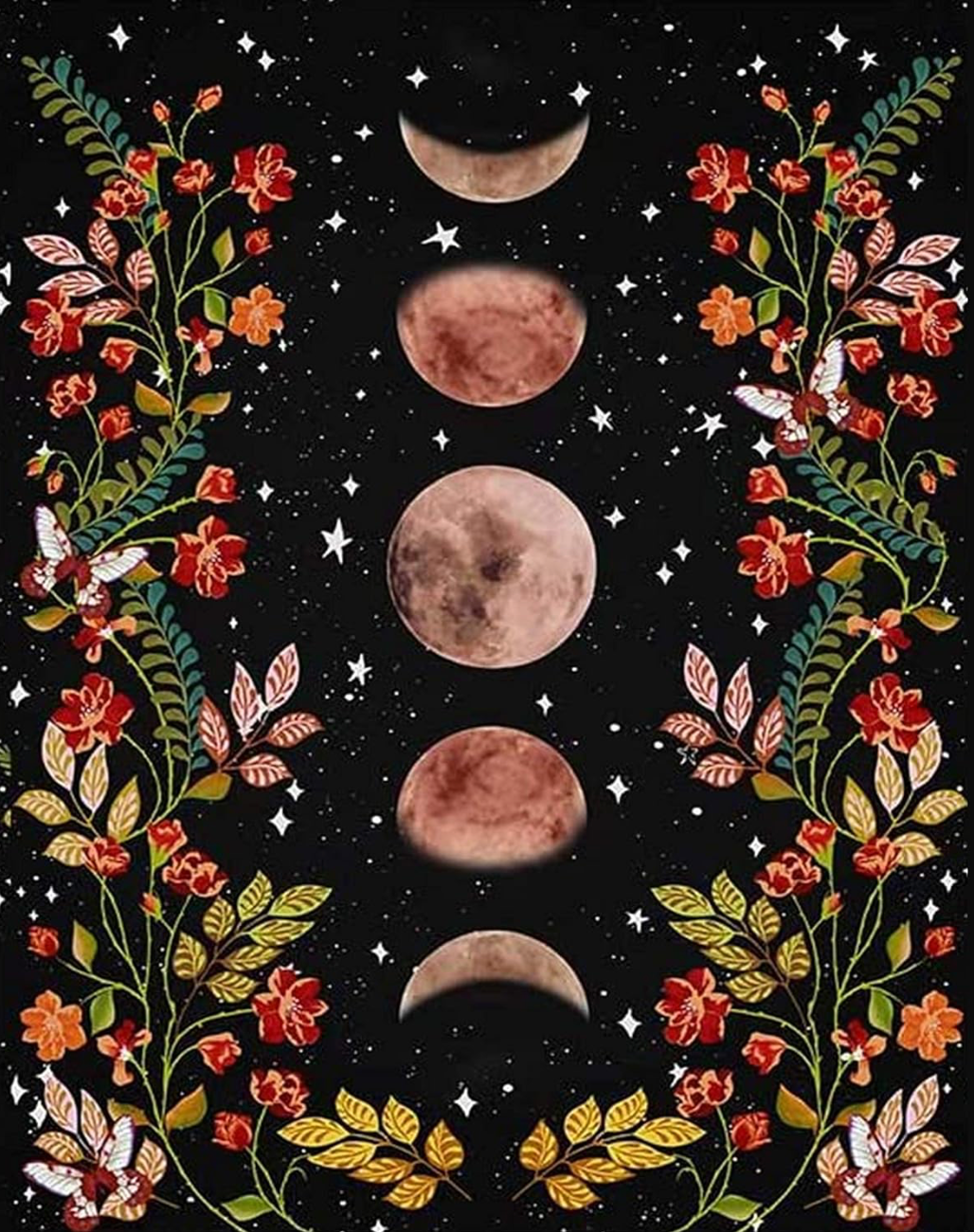
The moon moves through predictable phases, waxing and waning, growing bright and then disappearing into darkness before returning again. The menstrual cycle mirrors this pattern almost exactly. Bleeding often aligns with the new moon, a time of inwardness, rest, and release, while ovulation tends to align with the full moon, a time of outward expression, creativity, and connection. This was not once considered coincidence. It was understood as correspondence.
In modern life, many women feel disconnected from their cycles. The expectation to perform consistently every day, regardless of internal shifts, has created a sense of dissonance between body and environment. Hormones fluctuate, emotions change, energy rises and falls — yet there is little space to acknowledge these changes without judgment. As a result, the cycle becomes something to suppress or ignore rather than listen to.
Spiritually, this disconnection has consequences. The body communicates before the mind understands. When the menstrual cycle is honored rather than resisted, it becomes a teacher. The bleeding phase asks for stillness, reflection, and gentleness. It is a natural time for release — emotionally, spiritually, and physically. Trying to push through this phase with intensity often leads to exhaustion, irritability, or emotional overwhelm, not because something is wrong, but because something is being ignored.
As the cycle progresses, energy slowly returns. Creativity increases. Confidence grows. There is a sense of outward momentum. When this phase is honored, expression feels natural rather than forced. The body moves in cooperation with life instead of against it. Aligning awareness with these shifts does not require rigid tracking or perfection. It requires presence.
The moon does not demand attention. It simply moves. In the same way, the menstrual cycle does not ask to be analyzed endlessly. It asks to be respected. When women begin to observe how their emotions, intuition, and energy respond to lunar phases, a quiet clarity emerges. Sensitivity increases not because one is becoming fragile, but because one is becoming attuned.
This attunement is deeply spiritual. It restores trust in the body as a source of wisdom rather than inconvenience. It reminds us that cycles are not flaws. They are design. When the body is allowed to move in rhythm with the moon rather than in resistance to it, there is less inner conflict and more self-compassion. Spiritual alignment often begins not with transcendence, but with listening.


Dejar un comentario
Este sitio está protegido por hCaptcha y se aplican la Política de privacidad de hCaptcha y los Términos del servicio.